
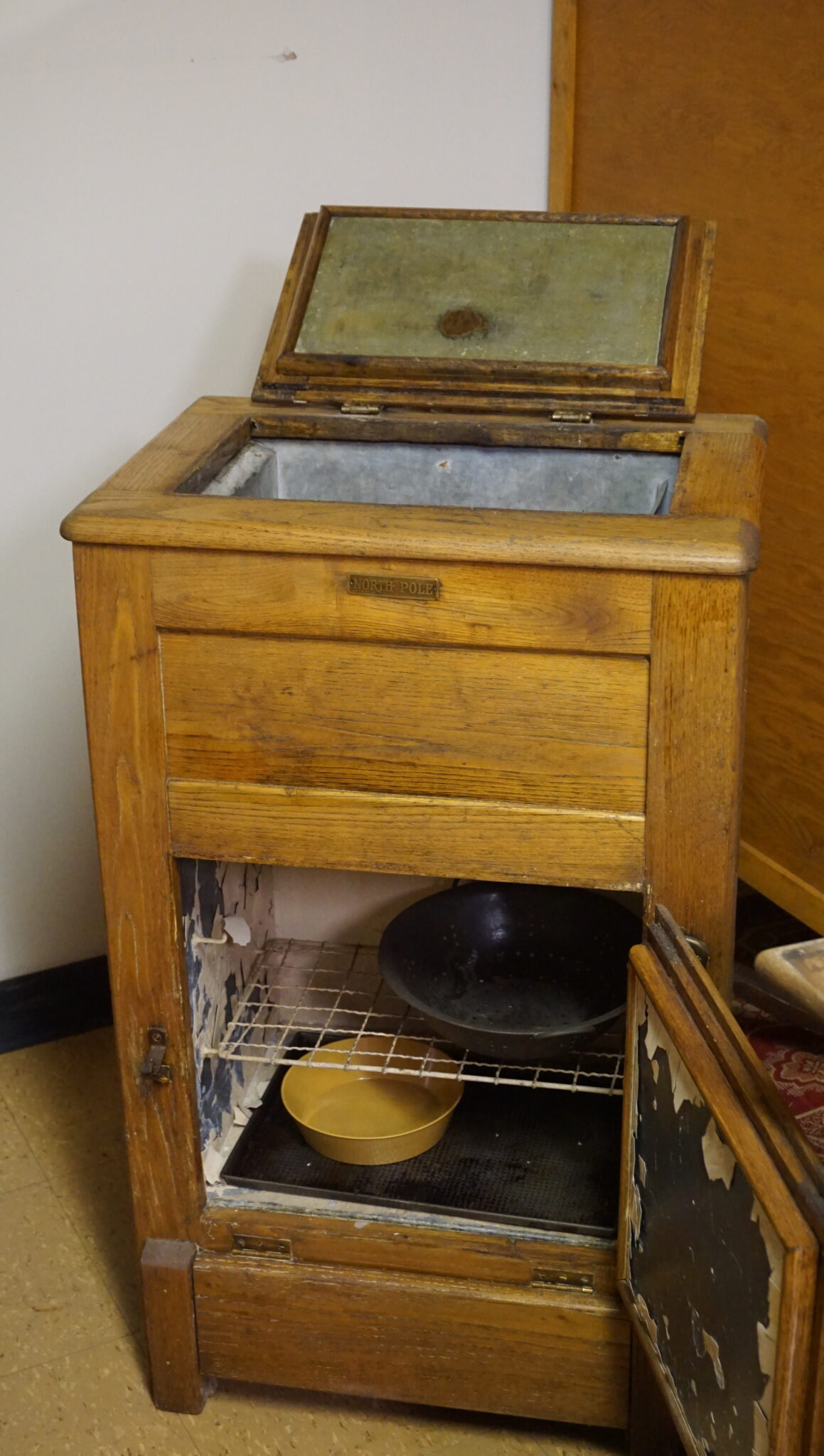
In the early part of the 20th century, there wasn’t a great way to keep food cold. Food was usually made fresh. It spoiled very quickly if left out. Ice boxes were the primary way to keep food cold and extend it’s shelf life. Below is an icebox showing how a large chunk of ice goes in the top (probably sawed out of a frozen lake). There is just a small compartment in the bottom for the food. Cold air sinks, so the ice was on top. To keep your ice box working long term, the owner had to have regular ice deliveries. There had to be a better way.
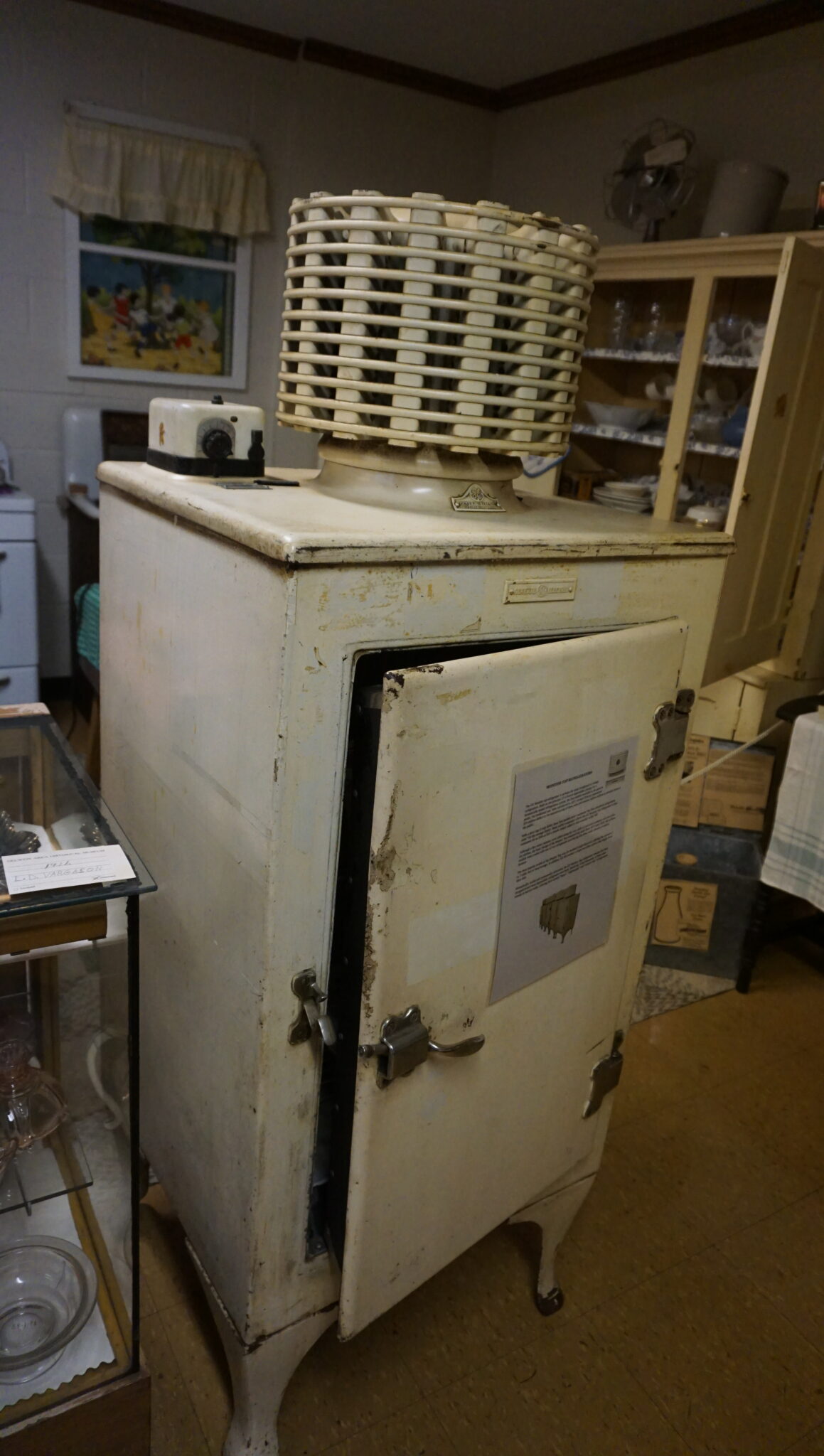
Enter the refrigerator in 1927. Or, in this case, General Electric Monitor Top. One of the first remotely affordable refrigerators that were small enough go in a home. They originally cost $300 ($5,500 today). The refrigerator is call a monitor top because they resembled the gun turrets on top of the early battleship the USS Monitor.
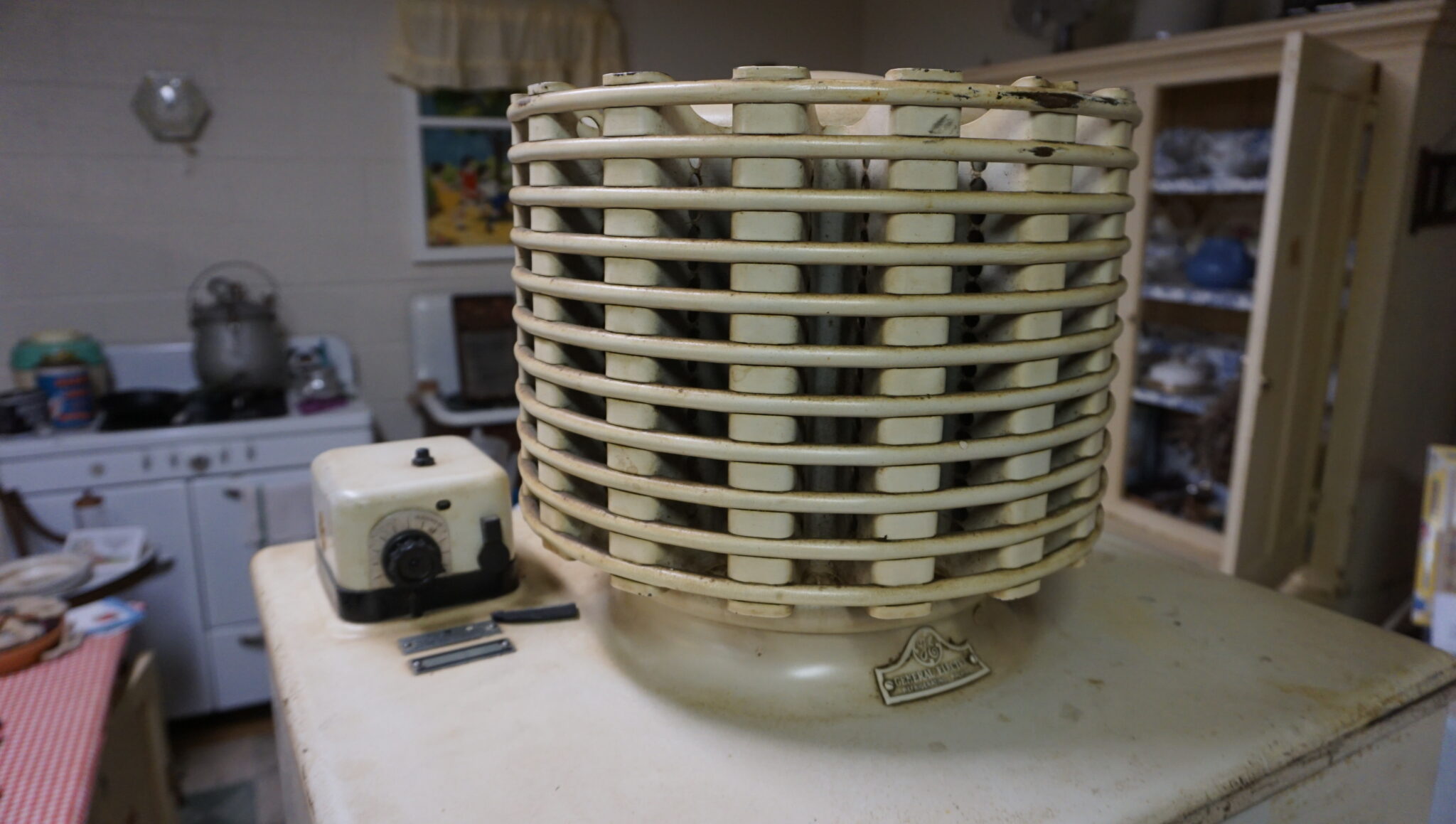
Refrigerators work by compressing a coolant to make it cold them run it through a heat sink inside to absorb the heat. The coolant then drops in pressure and is run through a second heat sink outside to release the heat. In modern refrigerators, the hot heat sink is hidden on the back against the wall. In the original designs, it is proudly stuck on top.
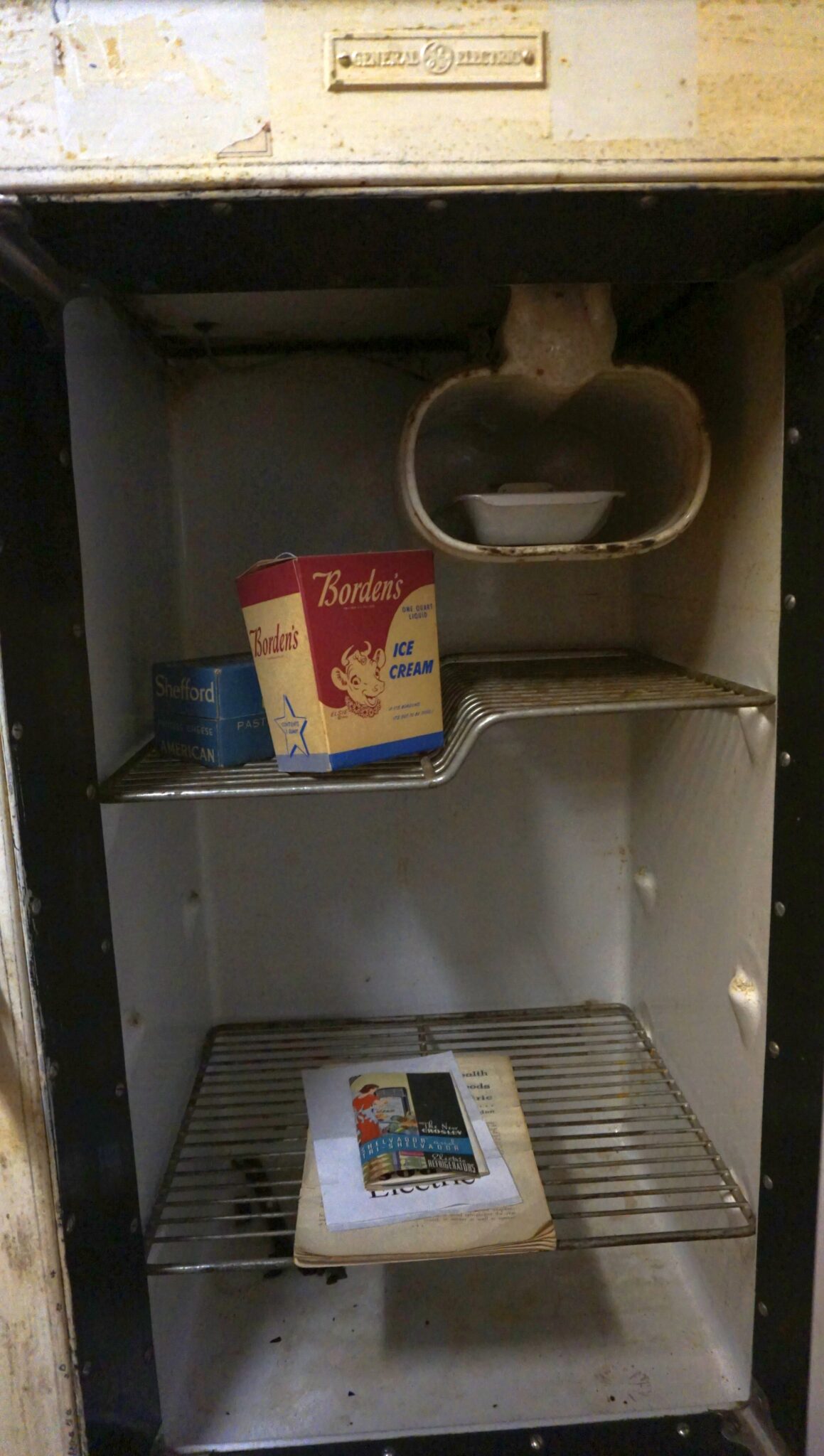
The cold coil is on top right of the inside. Right around the coil is coldest, hence the ice cube tray inside of it. The top shelf was the freezer, and the bottom shelf was the refrigerator.
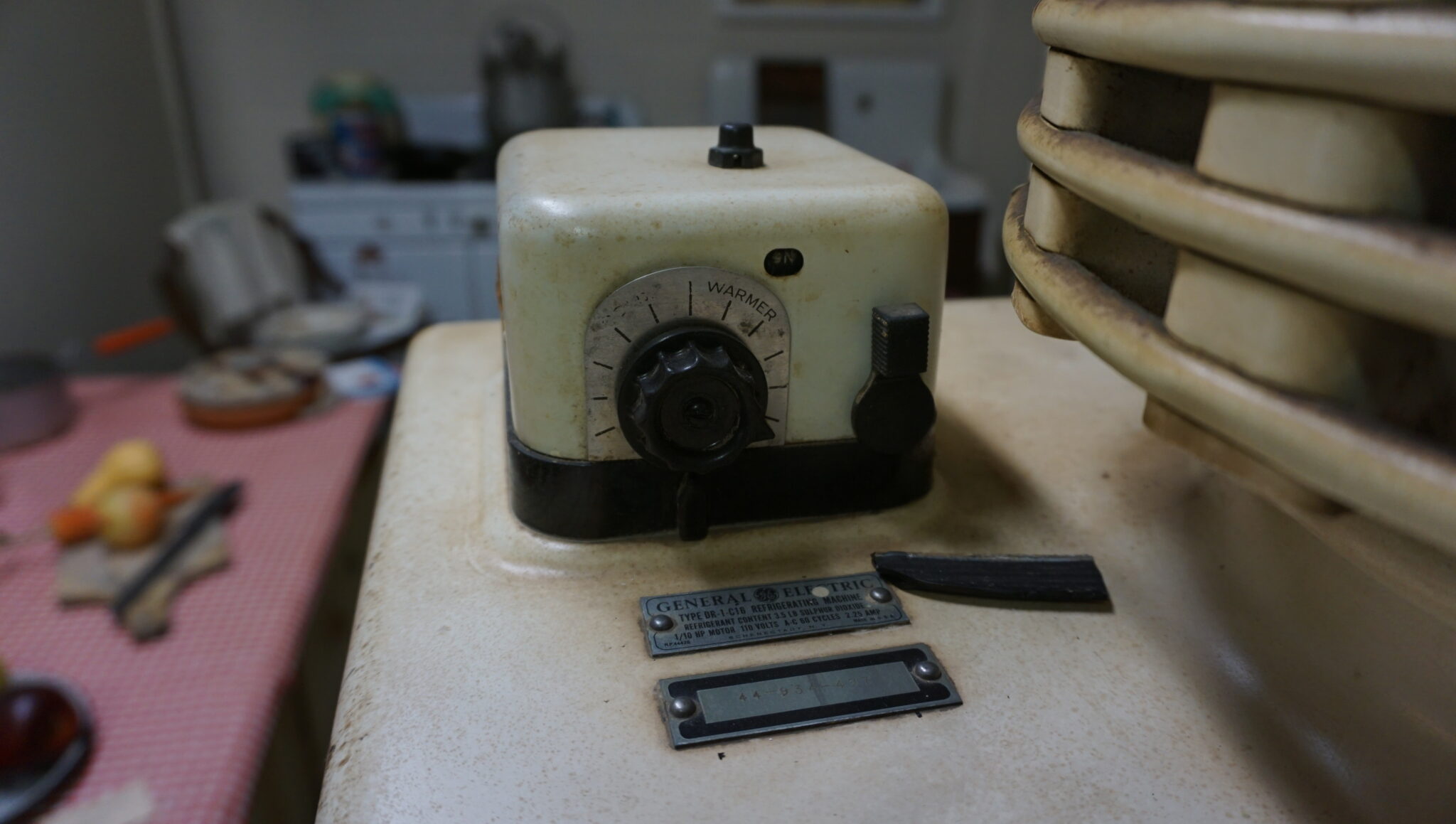
At the top is the thermostat that turns on and off the compressor to keep the temperature. It uses a bimetallic strip which is 2 different metals riveted together. As the strip heats up, they expand at different rates and bend, hitting a switch.
Source: https://www.antiqueappliances.com/monitor-tops/